Classic English Scones
Updated Feb 19, 2025
This post may contain affiliate links. As an Amazon Associate, I earn from qualifying purchases.
Light and delicious English scones, just like ones served at afternoon tea, can be made at home with this simple 6-ingredient recipe.
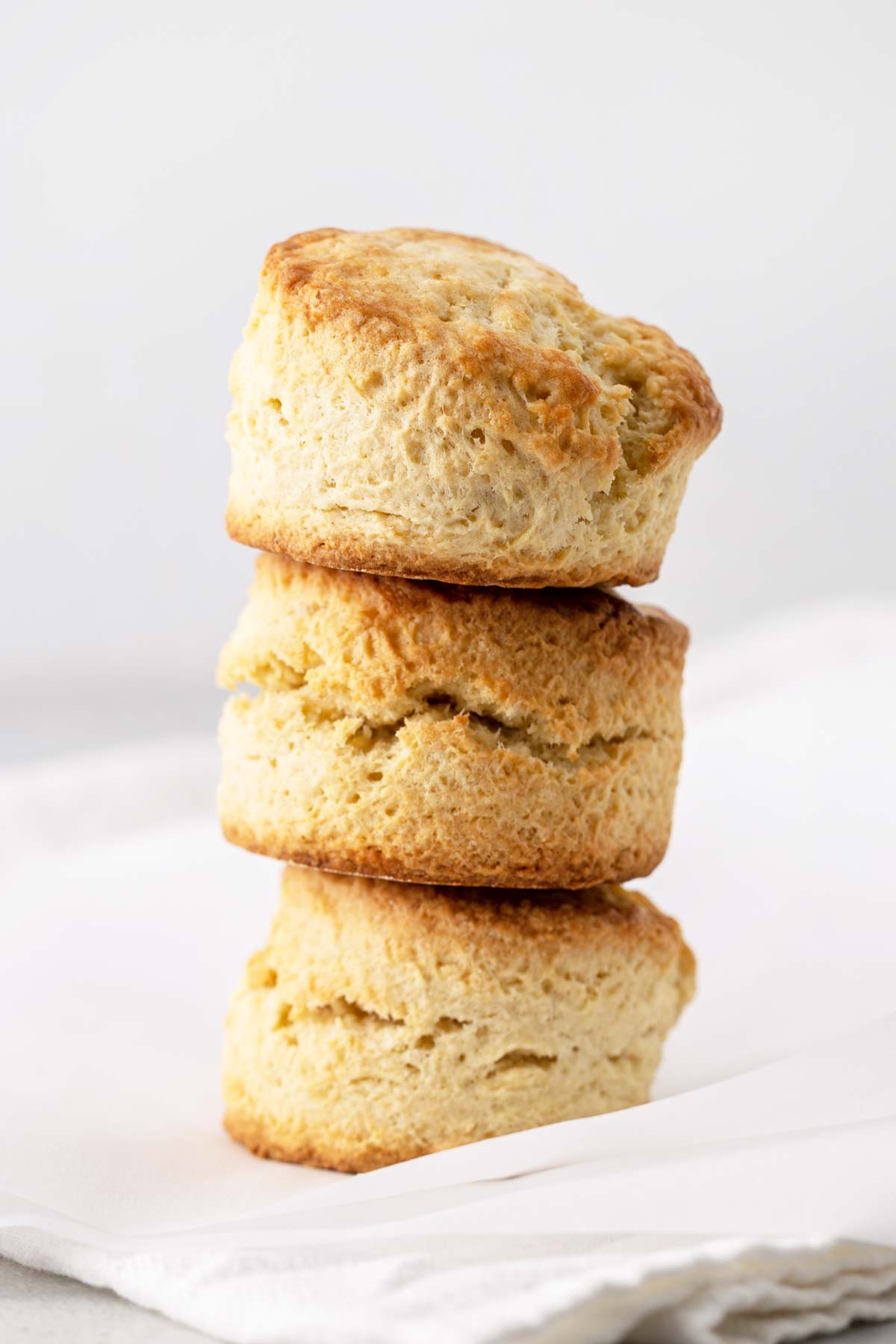
English Scones for Tea Time
How to do you pronounce scone? In the UK, it’s often pronounced scon, rhyming with gone. Me, since I’m in the US, I pronounce it as scone like cone.
Either way you say it, no afternoon tea would be complete without a batch of round English scones. The biscuit-like, subtly sweet pastry is light, flaky, and buttery, perfect for enjoying with a cup of hot tea.
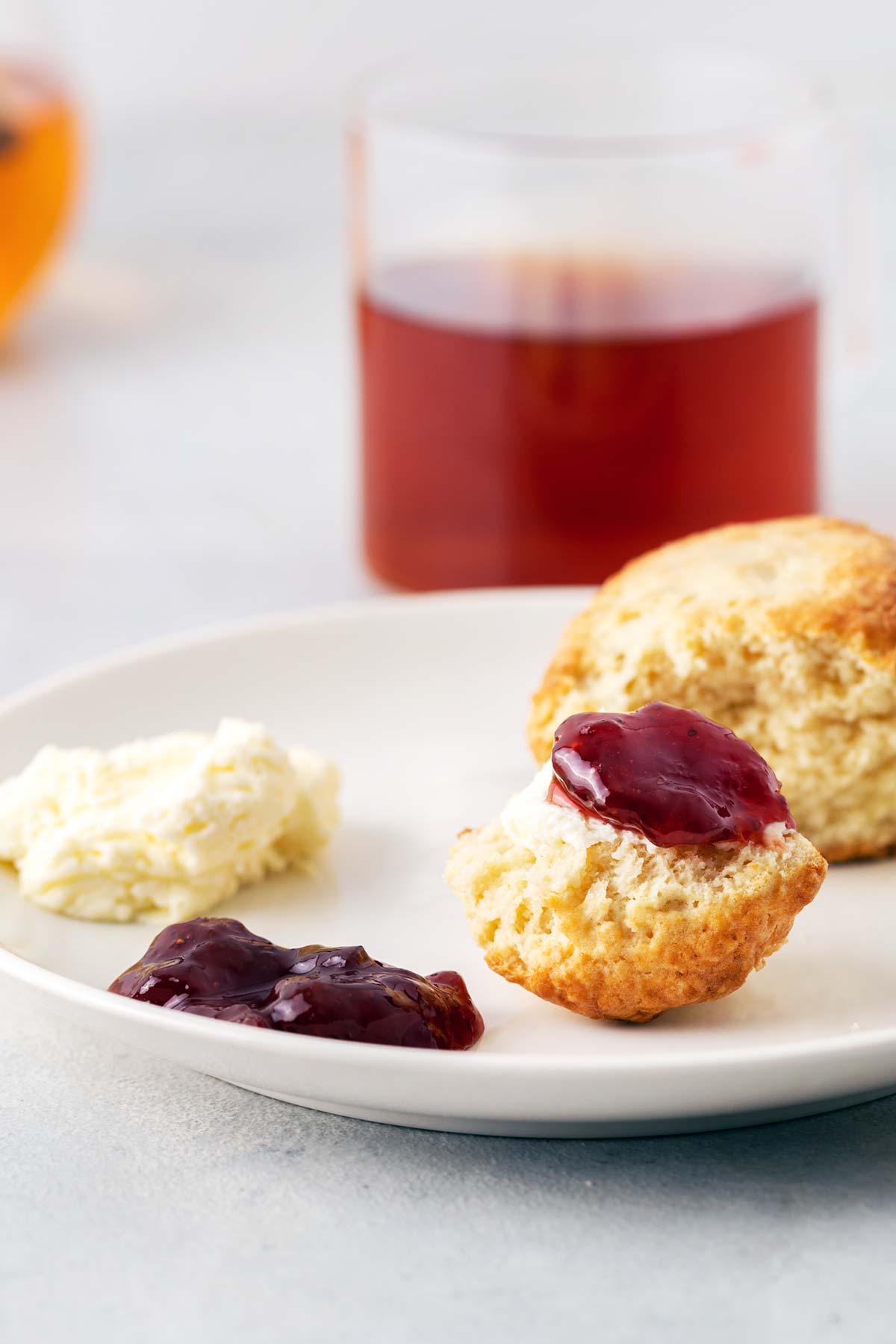
English scones are typically served with clotted cream and jam alongside a bigger spread of tea sandwiches and bite-sized desserts for afternoon tea. Tea served with scones with (clotted cream and jam) is called cream tea.
Note from Jee

When I go for afternoon tea in New York, I always see the round scones, never the triangle ones. So I did a little research on why…
English and American scones are not the same. There are a couple of key differences.
English scones are tall and round, while American ones are denser and cut into triangular wedges. English scones are made with less butter and sugar than American scones.
Now, as for the debate on what goes on first, the clotted cream or the jam, I always do clotted cream first. There is no wrong or right way and it’s totally up to you.
Recipe Summary
- This English scone recipe is made with simple ingredients that consist of flour, sugar, baking soda, butter, heavy cream, and egg.
- Round in shape, like classic scones you would find at afternoon tea.
- The recipe makes 7 to 8 round English scones, perfect for 4 serving, with 2 scones per person.
RELATED: How to Eat Scones Properly
Ingredient Notes
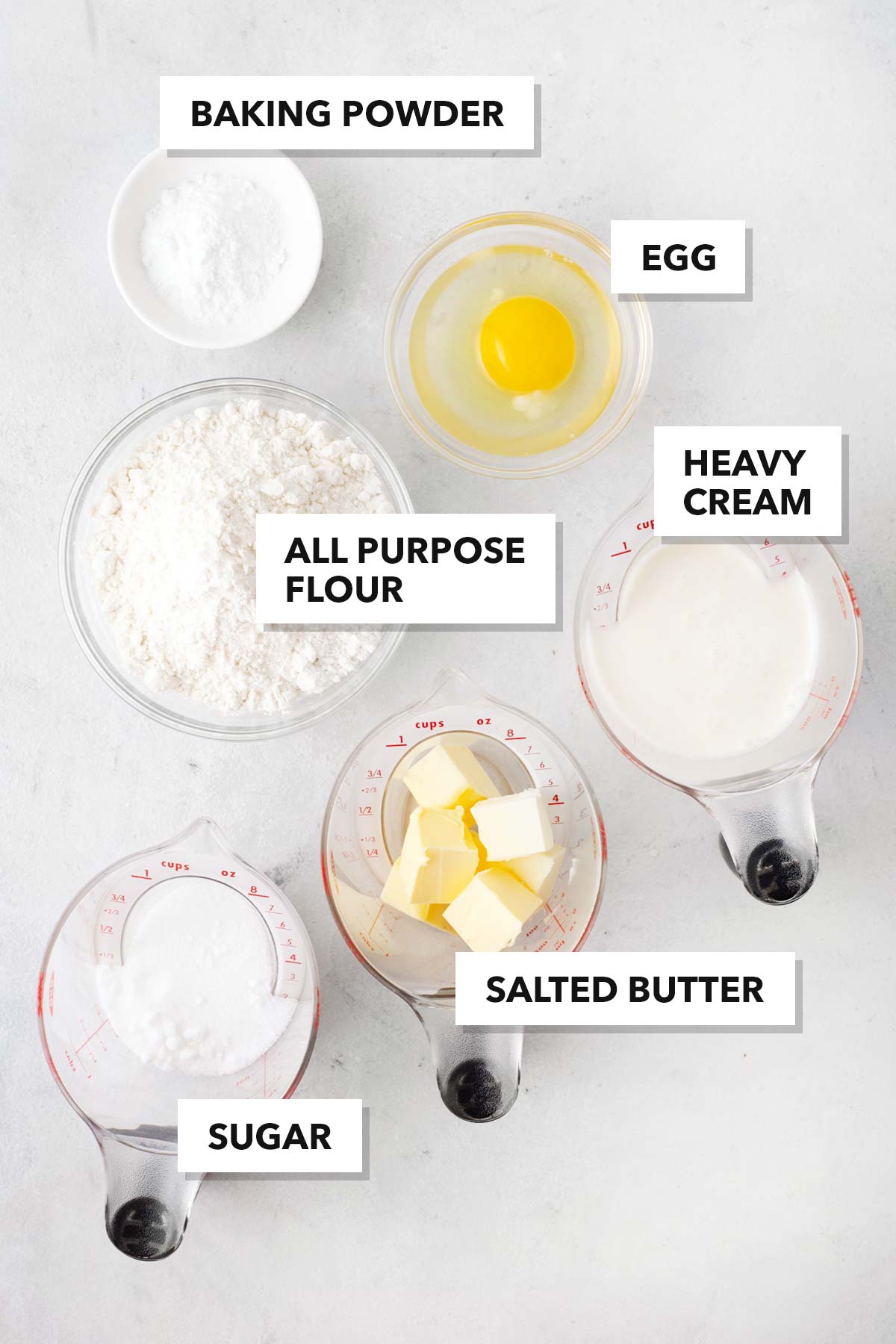
- Flour: Use any brand of all purpose flour.
- Sugar: White granulated sugar works the best for this recipe.
- Baking powder: This helps baked goods rise and gives them a light, airy texture.
- Salted butter: The cold butter will melt as it bakes to create flaky layers. Use a high-quality butter, like Kerrygold.
- Heavy cream: Heavy cream makes tender and moist scones.
- Egg: Egg helps enrich the dough. It’s also used in an egg wash to give the scones their beautiful golden tops.
For full ingredients and detailed instructions, please see the recipe card at the bottom of the post.
Step-by-Step Instructions
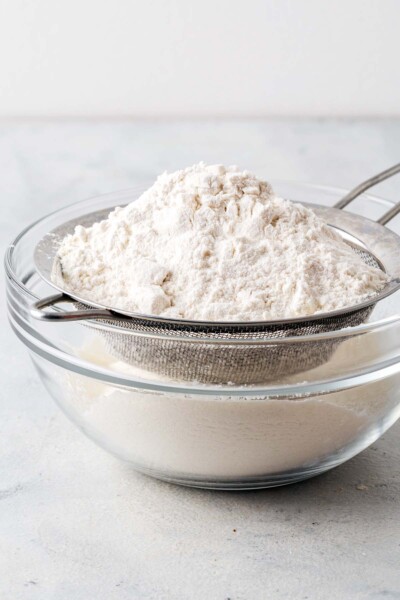
Step 1: Sift and combine the dry ingredients.
Remove all lumps from the flour, sugar, and baking powder.
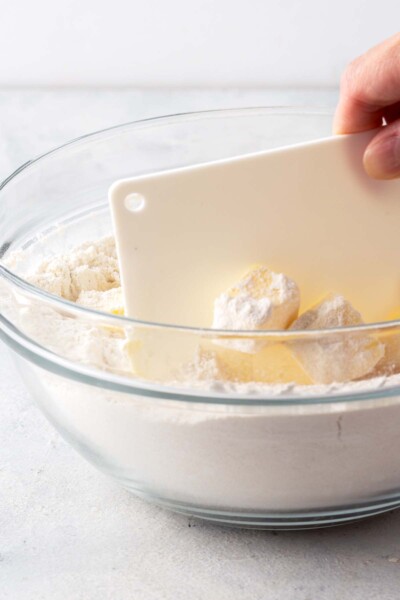
Step 2: Cube the butter and incorporate into the flour mixture. Use a pastry cutter to break the butter up into even smaller pieces and to keep the butter cold.
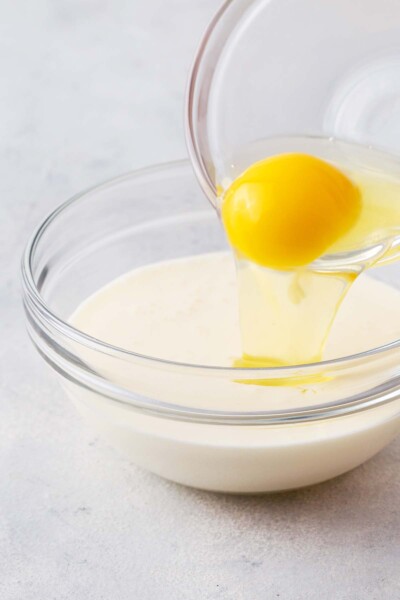
Step 3: Whisk together heavy cream and egg in a separate bowl.
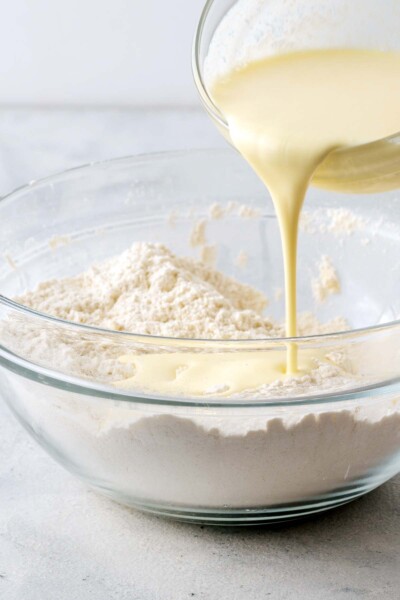
Step 4: Combine the wet and dry ingredients. Set aside a bit of the heavy cream and egg mixture to use as an egg wash.
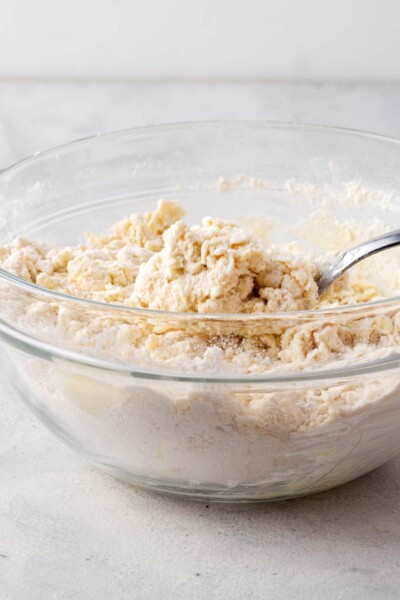
Step 5: Form the dough. Gently stir everything together with a fork.
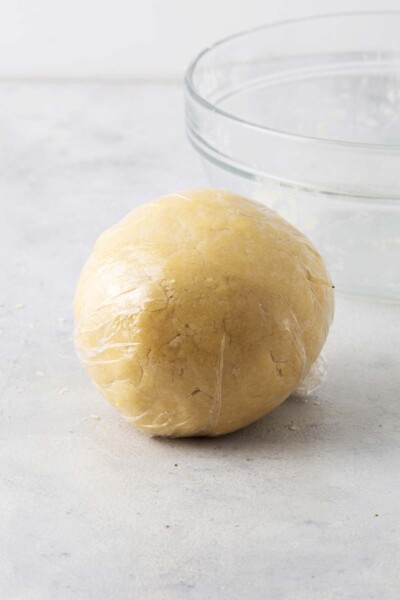
Step 6: Knead the dough into a ball. Place inside plastic wrap and refrigerate.
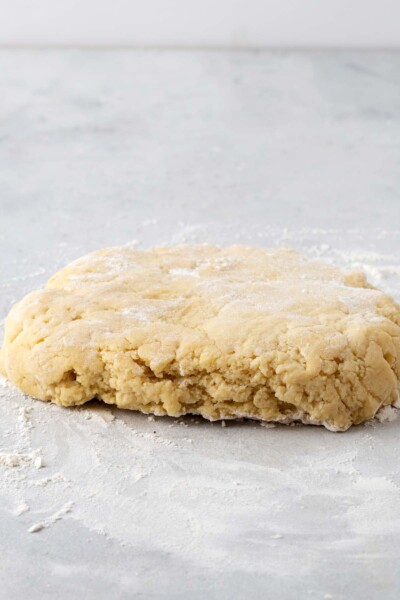
Step 7: Flatten the dough.
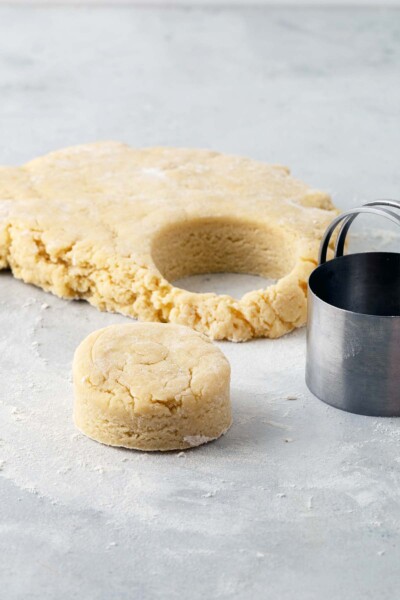
Step 8: Cut out the scones using a round cookie cutter.
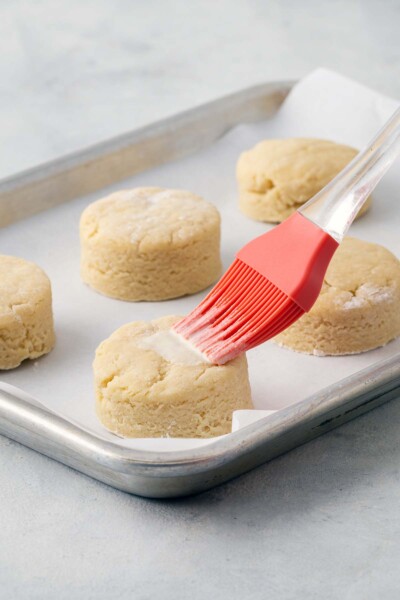
Step 9: Place on baking sheet and brush with egg wash. Use the reserved heavy cream and egg mixture.
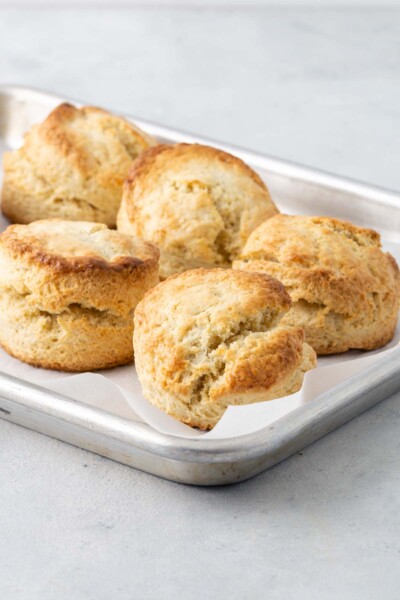
Step 10: Bake at 400°F for 20 minutes. Cool on a wire rack until it’s time to serve.
Recipe Notes
Use very cold butter.
When it comes to the wet ingredients, pull them out from the fridge only when you’re ready to use them. Using a cold egg and heavy cream will help keep the butter chilled so it melts in the oven to create flaky layers.
Be gentle with the dough.
If the dough is overworked, the scones will come out tough and chewy rather than light and buttery. When combining the wet and dry ingredients, do so gently and mix until the dough just comes together.
Freeze for later.
If you won’t be eating or serving all of the scones, you can freeze them unbaked. Place the cut scones on a tray and place in the freezer. Once they’re frozen, you can store in a ziplock bag for up to 3 months.
When ready to eat, brush the tops with some milk and bake as instructed in the recipe. You may need a few additional minutes since they’re frozen.
Expert Tips
- It’s important to sift the flour and other dry ingredients to remove any lumps. This will give the scones an even, airy texture without any dense pockets.
- To get perfectly round and tall scones, don’t twist the cutter. Simply push it down and pull straight up.
- Scones are traditionally served with jam and clotted cream.
Related
- How to Make a Proper Cup of Tea
- Afternoon Tea Etiquette Rules
- Difference Between Afternoon Tea and High Tea
- Afternoon Teas in NYC
- Tea Sommelier Tips to Make a Better Cup of Tea
Want to save this recipe to Pinterest for later? Pin it now to your Pinterest board!
Round English Scones
Ingredients
- 2 cups all-purpose flour
- ¼ cup granulated sugar
- 1 tablespoon baking powder
- ⅓ cup salted butter, (cold)
- ½ cup heavy cream, + 1 tablespoon for egg wash
- 1 large egg
Instructions
- Sift and combine the dry ingredients.In a large bowl, sift together the flour, sugar, and baking powder to remove any clumps.
- Cut the butter into small cubes and incorporate into the flour mixture.Avoid touching the butter with your hands since that will heat them up. Use a pastry cutter or two forks to break the cubes of butter up into small pieces inside the flour.
- Mix together the heavy cream and egg.Put ½ cup of heavy cream and egg into a small bowl or measuring cup and whisk to combine. A fork works well to mix the ingredients. Set aside 1 tablespoon of the mixture to use as an egg wash later and place in the refrigerator.
- Combine the wet and dry ingredients.Slowly pour the remaining heavy cream and egg mixture into the flour mixture. Use a fork to gently incorporate the ingredients and be careful not to overmix.The dough will look crumbly.
- Form the dough into a ball and chill in the refrigerator for 1 hour.Use your hands to coax the dough into a ball. It's normal if parts of the dough fall off. If it's too crumbly, add another tablespoon of heavy cream. Wrap the ball of dough in plastic wrap and chill in the fridge for at least 1 hour. Dough can be left in the refrigerator overnight.
- Preheat the oven to 400°F. Place a piece of parchment paper on a baking sheet.
- Flatten the dough.Flour the countertop. Remove the dough from the refrigerator and remove the plastic wrap. Gently knead the dough into a flattened circle that's 1 ½-inches thick. Fold the dough over itself once and flatten it to 1 to 1 ¼-inches thick.
- Cut out the scones.Use 2 ¼-inch biscuit or cookie cutter to form the individual scones. Make sure not to twist the cutter. Simply push it down and pull straight up.
- Brush with the egg wash.Place the cut out dough onto the baking sheet. Brush the tops with 1 tablespoon of heavy cream and egg mixture that was set aside in the refrigerator.
- Bake for 18 – 20 minutes.The scones are ready once the edges are golden and the tops are lightly browned. Cool on a wire rack until ready to serve.
Notes
- It’s important to sift the flour and other dry ingredients to remove any lumps. This will give the scones an even, airy texture without any dense pockets.
- Use very cold butter. When it comes to the wet ingredients, pull them out from the fridge only when you’re ready to use them. Using a cold egg and heavy cream will help keep the butter chilled so it melts in the oven to create flaky layers.
- Be gentle with the dough. If the dough is overworked, the scones will come out tough and chewy rather than light and buttery. When combining the wet and dry ingredients, do so gently and mix until the dough just comes together.
- Scones are traditionally served with jam and clotted cream.
- If you won’t be eating or serving all of the scones, you can freeze them unbaked. Place the cut scones on a tray and place in the freezer. Once they’re frozen, you can store in a ziplock bag for up to 3 months. When ready to eat, brush the tops with some milk and bake as instructed in the recipe. You may need a few additional minutes since they’re frozen.
Nutrition
Nutrition information is automatically calculated, so should only be used as an approximation.